For importers, warehouse decisions are rarely just about space. The right warehousing strategy can affect customs compliance, duty timing, inventory availability, cash flow, retail distribution, fulfillment speed, and the overall reliability of a supply chain.
A customs bonded warehouse is one option that can give businesses more control over imported goods before those products officially enter U.S. commerce. For companies involved in international shipping, consumer packaged goods, e-commerce, retail distribution, manufacturing, wholesale distribution, or U.S.–Mexico cross-border logistics, bonded warehousing can be an important supply chain tool.
The value is simple: a bonded warehouse gives importers a secure, regulated place to store eligible imported goods while delaying duty payment until the goods are withdrawn for U.S. consumption.
That can create more flexibility for businesses that need to stage inventory, manage demand changes, prepare for fulfillment, consolidate freight, support re-export programs, or avoid tying up cash before goods are ready to move into the market.
What is a Customs Bonded Warehouse?
According to U.S. Customs and Border Protection, a customs bonded warehouse is a secured facility where imported dutiable merchandise may be stored, manipulated, or undergo approved operations without payment of duty for up to five years from the date of importation.
In plain English, a customs bonded warehouse is a secure warehouse supervised by CBP where eligible imported goods can be stored before duties are paid.
The duties are generally paid when the goods are withdrawn from the bonded warehouse and entered into U.S. commerce. If the goods are re-exported instead of sold or distributed in the United States, they may avoid U.S. duty payment depending on the shipment, product type, destination, and applicable customs rules.
A bonded warehouse does not remove customs requirements. It gives importers a controlled environment to manage imported inventory before deciding the next step.
Why Do Companies Use Customs Bonded Warehouses?
Businesses use customs bonded warehouses because they create flexibility between international shipping and domestic distribution.
When imported goods arrive in the United States, the importer may not always be ready to release them into the domestic market. Products may need to be staged for a retail launch, held for seasonal demand, prepared for fulfillment, consolidated with other shipments, reviewed for documentation, or redirected to another country.
A bonded warehouse can help companies avoid making rushed decisions simply because freight has arrived.
Instead of immediately paying duties and moving goods into domestic inventory, importers may be able to hold eligible goods under bond until they know whether the products should enter U.S. distribution, remain in storage, be transferred, or be re-exported.
The Main Business Benefits of a Customs Bonded Warehouse
1. Duty Deferral Can Improve Cash Flow
One of the biggest reasons importers use bonded warehousing is duty deferral.
Instead of paying duties as soon as imported goods arrive, businesses may be able to store eligible goods under bond and pay duties when the goods are withdrawn for U.S. consumption.
This can be especially valuable for companies importing large volumes, high-value goods, seasonal products, retail inventory, or consumer packaged goods.
For example, a company importing products for a retail launch may not want to pay duties months before those goods are sold, distributed, or needed by customers. Bonded storage can help align duty payment more closely with actual inventory movement.
For finance, procurement, and supply chain teams, that can support better working capital management and more predictable cash planning.
2. Re-Export Flexibility Supports Global and Regional Distribution
According to the International Trade Administration, duties on goods in a bonded warehouse are deferred until the goods are removed into customs territory, and goods are not subject to duties if they are reshipped to foreign points.
That makes bonded warehousing useful for businesses that import goods into the United States but may later ship those goods to Mexico, Canada, or another international market.
This matters for companies using the United States as part of a larger North American distribution strategy.
For example, a business may import inventory into Southern California and later decide whether that inventory should move into U.S. distribution, cross into Mexico, ship to another country, or be returned to a supplier. Bonded warehousing gives the importer more time and flexibility to make that decision.
3. Better Inventory Timing for Fulfillment and Distribution
A customs bonded warehouse can help businesses separate inventory that has not yet entered U.S. commerce from inventory that is ready for domestic fulfillment or distribution.
That distinction matters for companies managing imported goods across multiple sales channels, customers, suppliers, or regions.
Bonded storage can support:
- Retail launch staging
- E-commerce fulfillment planning
- Wholesale distribution
- CPG inventory staging
- Seasonal inventory control
- Supplier consolidation
- Import overflow storage
- Cross-border freight planning
- Product release timing
- Re-export decisions
- Reverse logistics and returns strategies
For fulfillment teams, bonded warehousing can be especially useful when imported goods are physically present but not yet ready to ship to customers, stores, fulfillment centers, or distribution centers.
4. More Control Over Consumer Packaged Goods Supply Chains
Consumer packaged goods companies often operate with tight delivery windows, retailer requirements, high SKU counts, promotional timelines, and demand volatility.
A bonded warehouse can help CPG importers hold and stage inventory before it enters domestic distribution.
This may help companies manage:
- Retail replenishment
- Grocery and wholesale distribution
- Product launch timing
- Seasonal promotions
- Imported packaged goods
- Lot and SKU organization
- Multi-supplier consolidation
- Inventory overflow
- Demand uncertainty
- Re-export or redirected inventory
For CPG brands, timing is critical. Products need to reach the right retailer, distributor, warehouse, or fulfillment center at the right time. Bonded warehousing gives importers another layer of control before inventory officially enters the U.S. market.
5. A Stronger Buffer for Supply Chain Disruptions
Modern supply chains are exposed to delays from documentation issues, customs review, supplier changes, retailer scheduling, port congestion, border congestion, demand shifts, and transportation capacity constraints.
A bonded warehouse can act as a controlled buffer when the next step is not ready.
This can help when:
- A retailer delays a receiving appointment
- A customs broker needs additional documentation
- The importer is deciding between U.S. release and re-export
- Inventory arrives before a product launch
- Multiple supplier shipments need to be consolidated
- Imported goods need to be held before fulfillment
- Demand changes after the shipment arrives
- Products need to be staged near a border, port, or major freight lane
The benefit is not just storage. The benefit is decision-making flexibility.
Why Customs Bonded Warehousing Matters for U.S.–Mexico Trade
For companies moving goods between Mexico and the United States, bonded warehousing can be especially valuable because cross-border supply chains often depend on timing, documentation, visibility, and coordinated handoffs.
According to the U.S. Census Bureau’s April 2026 year-to-date goods trade data, Mexico was the United States’ largest goods trading partner, representing $317.3 billion in total goods trade and 16.4% of total U.S. goods trade.
That volume reflects how deeply connected U.S. and Mexico supply chains are across manufacturing, retail, consumer goods, automotive, electronics, industrial products, food and beverage, and distribution.
A customs bonded warehouse near the U.S.–Mexico border can help importers stage goods closer to where cross-border decisions happen. That can support faster coordination between warehousing, customs brokers, carriers, manufacturers, retailers, fulfillment teams, and final delivery locations.
Who Benefits Most from a Customs Bonded Warehouse?
A customs bonded warehouse may be useful for many types of businesses, but it is especially valuable when imported inventory needs flexibility before entering the U.S. market.
Importers With High Duty Exposure
Companies importing high-value or high-volume goods may benefit from deferring duty payment until inventory is released into U.S. commerce.
Consumer Packaged Goods Companies
CPG brands can use bonded warehousing to stage imported products before retail distribution, promotional launches, fulfillment, or seasonal demand.
Retailers and E-Commerce Companies
Retail and e-commerce importers can use bonded storage to hold goods before launch dates, marketplace distribution, or customer fulfillment.
Manufacturers and Nearshoring Operations
Manufacturers with U.S.–Mexico supply chains may use bonded warehousing to manage components, finished goods, supplier consolidation, and cross-border timing.
Distributors and Wholesalers
Distributors can use bonded storage to manage imported inventory before deciding whether goods should move into domestic channels, be split across customers, or be re-exported.
Businesses Managing Re-Export or Returns Programs
Companies that import goods but may later send them to another country can use bonded warehousing as part of a re-export or reverse logistics strategy.
Customs Bonded Warehouse vs. Regular Warehouse
A regular warehouse stores goods that have already entered the domestic supply chain or do not require customs-controlled storage.
A customs bonded warehouse stores eligible imported goods under CBP supervision before duties are paid and before the goods are released into U.S. commerce.
The main difference is customs status.
In a regular warehouse, goods are generally cleared for domestic use. In a bonded warehouse, eligible imported goods can remain under bond until they are withdrawn, released, transferred, or re-exported.
For importers, that difference can affect cash flow, compliance, inventory timing, and distribution strategy.
Customs Bonded Warehouse vs. Foreign-Trade Zone
A customs bonded warehouse and a foreign-trade zone are both customs-related tools, but they are not the same.
A customs bonded warehouse is commonly used for storing eligible imported goods under bond, deferring duties, supporting re-export decisions, and managing inventory before release into U.S. commerce.
A foreign-trade zone may support broader operations, including certain manufacturing or processing activities, depending on authorization and compliance requirements.
For many importers, the right choice depends on product type, shipment volume, duty exposure, operational complexity, compliance requirements, and whether the business needs simple bonded storage or a broader trade program.
When a Customs Bonded Warehouse May Not Be the Right Fit
Bonded warehousing is useful, but it is not necessary for every shipment.
It may not be the best option when:
- Goods need immediate domestic delivery
- Duties are low and storage costs outweigh duty deferral benefits
- Inventory has already cleared customs
- The product is not eligible for bonded storage
- The business does not need re-export flexibility
- The shipment requires handling that is not allowed under bond
- The importer lacks the documentation needed for bonded movement
- The supply chain does not benefit from delayed duty payment
A strong logistics partner should help determine whether bonded warehousing improves the business case for a shipment, rather than recommending it automatically.
What B2B Buyers Should Look For in a Bonded Warehouse Provider
Choosing a bonded warehouse provider is not only about square footage. The right provider should help reduce friction between customs, warehousing, transportation, fulfillment, and final delivery.
Before selecting a bonded warehouse partner, ask:
- Is the facility authorized for bonded warehousing?
- Can the provider coordinate with customs brokers?
- Does the provider understand U.S.–Mexico cross-border freight?
- Can the warehouse support inventory visibility and documentation control?
- Does the provider offer transportation services after storage?
- Can the team support retail, CPG, manufacturing, or fulfillment requirements?
- Is the facility located near important ports, border crossings, or freight lanes?
- Can the provider support transloading, cross-docking, or consolidation?
- Does the team provide proactive communication when shipment status changes?
- Are there bilingual operations teams for cross-border coordination?
- Does the provider have compliance, security, and transportation credentials?
A bonded warehouse becomes more valuable when it is connected to the rest of the supply chain.
How Bonded Warehousing Fits Into Supply Chain Management
Bonded warehousing is not just a customs service. It can be part of a broader supply chain management strategy.
It connects to:
- International shipping
- Freight forwarding
- Customs broker coordination
- Cross-border transportation
- Inventory control
- Fulfillment planning
- Retail distribution
- Consumer packaged goods delivery
- Transloading
- Cross-docking
- Truckload and LTL shipping
- Expedited freight
- Re-export planning
- Supplier consolidation
- Transportation visibility
When these services are disconnected, importers may face delays, duplicate communication, unclear accountability, and unnecessary handoffs.
When bonded warehousing is connected to transportation and logistics execution, importers can manage inventory with more control from arrival to final destination.
Key Takeaway: Why Customs Bonded Warehousing Matters
A customs bonded warehouse gives importers more control over imported inventory before it officially enters U.S. commerce.
For businesses managing shipping, fulfillment, supply chain management, cross-border transportation, CPG distribution, retail replenishment, or manufacturing inventory, bonded warehousing can support:
- Duty deferral
- Cash flow improvement
- Re-export flexibility
- Better inventory timing
- More controlled fulfillment planning
- Stronger supply chain resilience
- Cross-border logistics flexibility
- Reduced pressure during customs or documentation delays
- Better alignment between imported inventory and actual demand
The main value is flexibility. A bonded warehouse gives businesses more time, more options, and more control over imported goods.
About Agramont’s Bonded Warehouse and Cross-Border Logistics Services
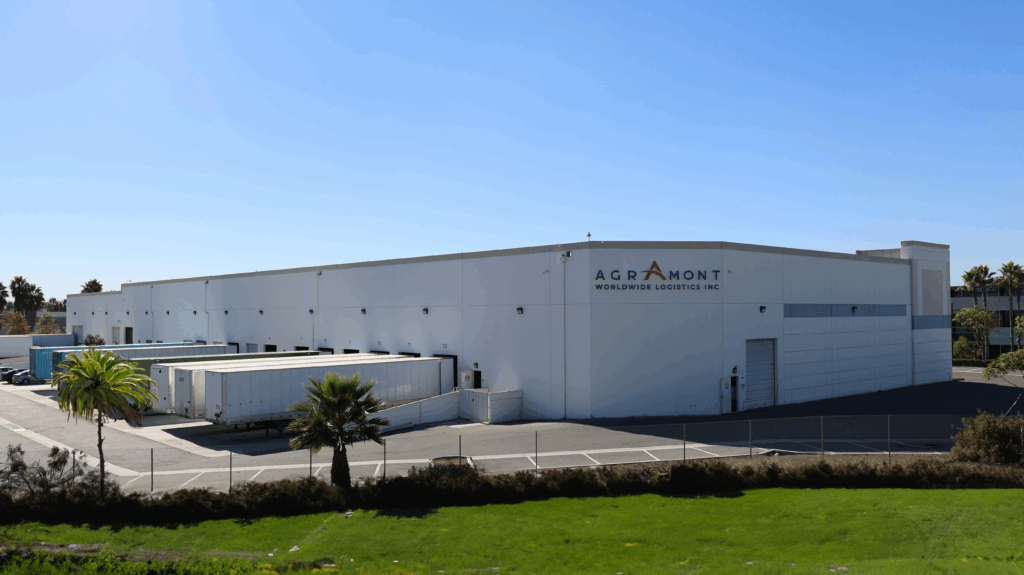
Agramont Worldwide Logistics is a certified woman- and minority-owned 4PL asset-based hybrid logistics provider headquartered in San Diego, California, with operations across the United States, Mexico, and Canada.
Agramont supports companies with shipping, fulfillment, warehousing, transportation, and supply chain management services across North America. Services include OTR transportation across the U.S., Mexico, and Canada, cross-border freight, LTL, air freight, ocean freight, drayage, intermodal, warehousing, and bonded warehouse support.
Agramont’s network includes border-connected infrastructure in key markets such as San Diego, Tijuana, Laredo, Houston, Monterrey, Nuevo Laredo, Mexicali, Calexico, and Queretaro.
Agramont’s operating model is built around control, visibility, and communication. The company combines asset-based transportation, bonded warehouse capabilities, bilingual support, real-time shipment visibility, and cross-border expertise to help businesses move goods more reliably.
Agramont’s technology stack includes Motive for track-and-trace GPS, Alvys as a transportation management system with EDI and ADP integration, and Project44 integration for shipment visibility. Agramont also uses control tower operations, dedicated customer service, transportation planning, dispatching, KPI tracking, and quarterly satisfaction surveys to support consistent service performance.
Agramont’s internal KPI targets include 95.55% overall performance, 95% acceptance, 95% tracked shipments, 100% ATA filled on time, 100% load on time, 95% delivery on time, and 99% load quality.
For importers, manufacturers, consumer packaged goods companies, retailers, distributors, and fulfillment teams, Agramont’s bonded warehouse services can help connect customs-controlled storage with the transportation network needed to move products to their next destination.
Want to See if a Customs Bonded Warehouse Makes Sense for Your Business?
If your business imports goods, manages U.S.–Mexico freight, distributes consumer packaged goods, stages retail inventory, or needs more flexibility before releasing products into U.S. commerce, Agramont can help you evaluate whether bonded warehousing is the right fit.
Contact Agramont Worldwide Logistics to request a bonded warehouse quote, discuss your shipment, or schedule a walkthrough of the San Diego bonded warehouse facility: